Monday, June 17, 2019

The Founding of NCRI and Massoud Rajavi’s Work


Massoud Rajavi joined the PMOI/MEK in 1967. Soon he was appointed by the Mohammad Hanifnejad, the leader and founder of MEK Iran, to the MEK’s ideological group. There he helped the study and documentation of the organization’s ideological principles. Later, Rajavi became a member of the PMOI/MEK Iran’s Central Committee.

Massoud Rajavi, since 1981, has remained adamant that the only solution for Iran’s and Middle East’s problems is a is democratic regime change in Iran.

Rajavi holds the belief that the Iranian people and their organized resistance movement have everything they need to bring about democratic change in Iran. It is upon this belief that he has founded the largest independent opposition movement in Iran’s modern history.

On numerous occasions, Western states have tried to tackle the challenges posed by the Iranian regime. They have done this through appeasement and rapprochement and the endorsement of so-called “moderate” and “reformist” groups within the regime. It has often been at the cost of causing damage to the Iranian people and the Iranian opposition.

Friday, May 31, 2019

Massoud Rajavi’s Vision for the Future of Iran

The National Council of Resistance of Iran (NCRI) is a coalition of 540 political and distinguished Iranian personalities and five organizations of different persuasions. They are committed to a democratic, secular and coalition government in Iran. The largest and most popular group resistance group inside Iran, People’s Mujahedin Organization of Iran or Mujahedin-e Khalq (PMOI, MEK Iran) is also a member of NCRI. Half of the members of organization are female council’s members.

The NCRI has been supported by several thousand members of parliaments, political leaders and party officials in Europe and the United States, as a viable and democratic alternative against the mullahs’ dictatorship in Iran.


Massoud Rajavi announced the formation of the democratic alternative to the religious, terrorist dictatorship, the Iran Regime National Council of Resistance of Iran, on July 29, 1981.

This coalition of Iranian opposition groups aims to replace the theocratic regime of Khomeini with a free, secular and democratic state. The Massoud Rajavi’s NCRI became a rally point for anyone who endorsed regime change and supported democracy in Iran.

Massoud Rajavi has concentrated his efforts to the Council since the formation of the NCRI.

Thanks to his management of NCRI’s affairs, he has earned the trust of the NCRI’s members.

Massoud Rajavi, was the top wanted opposition figure in Iran. On July 29, 1981, he exited the country with the help of personnel in Iran’s air force who opposed the regime.

Rajavi landed in France. There he took refuge and established the headquarters of the NCRI to further pursue its fight against the Iranian regime.

Massoud Rajavi’s vision for the future of Iran


Since 1981, Massoud Rajavi was determined that a democratic regime change in Iran is the only solution to the problems of Iran and the Middle East.

Massoud Rajavi believed that the Iranian people and their organized resistance movement have everything they need to bring about democratic change in Iran, and it is upon this belief that he has founded the largest independent opposition movement in Iran’s modern history.

Through appeasement and rapprochement and the endorsement of so-called “moderate” and “reformist” groups within the regime, Western states have tried on numerous occasions to tackle the challenges posed by the Iranian regime, and it has often been at the cost of causing damage to the Iranian people and the Iranian opposition.

Massoud Rajavi has remained firm on his stance that the religious dictatorship ruling in Iran does not have the potential for reform. His idea has been analyzed in many academic publications.

Today, it has become evident that Massoud Rajavi’s understanding and vision of Iranian politics had been accurate all along.

Although the Iranian regime has imposed heavy security measures and repression, people across Iran are protesting and chanting slogans against the regime’s entirety. They are calling for the overthrow of the mullahs’ regime, the goal that Massoud Rajavi and the MEK have been fighting for since 1981.

In August of 1993, the NCRI elected the wife of Massoud Rajavi, Maryam Rajavi as the future President of Iran.

Madam Rajavi’s mandate is to oversee the peaceful transfer of power to the Iranian people following the regime’s overthrow. Also, it opposes Iran's Nuclear Weapons Program.

Thursday, April 25, 2019

The Year of Revolution and Freedom

Congratulations to my compatriots in all cities and villages across Iran and to Iranians across the world on the advent of the Persian New Year 1398.

Congratulations on Nowruz to the families of martyrs, to the resistance units, to supporters of the Iranian Resistance, to political prisoners, to members of the National Council of Resistance of Iran (NCRI), to MEK Iran freedom fighters and to Massoud Rajavi.


Parallel with this year’s uprisings, which exhibit the Iranian society’s devotion to welcome rejuvenation and spring, there was a continuous effort within the ranks of the Iranian Resistance to improve and advance humanitarian values and ideals. This effort was ongoing throughout the movement, from the Mujahedin-e Khalq organization, to other members and supporters of the Resistance in various countries, and to members of the resistance units in different cities inside Iran.

The remarkable features of these efforts were reinforced resolve, renewed choices, increased motivation and advances by leaps and bounds in realizing the values of the ideals of humanity and struggle.

Yes, this is indeed a new day with a new revolution in the making, bringing about change. Everyone is passionately endeavoring to create new values to reach the glorious destination of freedom. Everyone is trying their best and making their greatest sacrifice to fulfil their commitment to their enchained nation. They are showing that the strength within their collective enterprise and their coherent and robust organization as well as the power of their people is that enormous and undying force that will uproot the mullahs’ theocratic regime.

This is why the Iranian Resistance’s Leader, Massoud Rajavi, declared that we have entered a new phase. Regardless of how long it takes and despite all the ups and downs, we must be ready and prepared because the policy of appeasement has failed, a policy which had protected the inhumane mullahs for three decades.

Now the overthrow of the inhumane enemy is inevitable. Before all else, the army of freedom must be determined and get prepared by diving into a sea of rebellion and revolution. The instruments of revolution must be prepared.

My salutations to your unwavering resolve, your vigor, and our people’s resistance.

Again, I would like to remind you of Massoud Rajavi’s words in his historic (1980) speech in Rasht, when he said, “Life is tied to the future. Life belongs to those who have a future. Now, it belongs to you… If you choose, if you rise up, if you are vigilant, then you would be the ones who will shape the future. It has always been like this, and it will always continue to be like this. Today, walls will only be torn down in this way.”

Tuesday, April 23, 2019

We Can Free Our Occupied Homeland

The regime’s campaign to demonize the opposition — the Mujahedin-e Khalq under the leadership of Massoud Rajavi and NCRI President Maryam Rajavi — has failed. Iran’s youth knows that the Resistance is part of Iran’s social fabric and a movement seeking justice for over 30,000 political prisoners massacred during the summer of 1988.


Khamenei’s speeches over the years lauded the power of his regime, claiming it continues to enjoy popular support. He called Iran’s youth the “driving force” of his regime. Khamenei failed to mention that over the past four decades his regime executed tens of thousands of youths.

However, he acknowledged that he is facing a dilemma of defections among his regime’s supporters, and stated that the regime’s enemy is not the U.S., but MEK Iran, who are active and present “among us” inside Iran.

Khamenei admitted that his regime’s survival faces “a treacherous road” full of “obstacles”, and is in need of a major “intellectual and practical overhaul.” He described senior regime officials as “tired, out of steam and lacking any spirit.”

Khamenei added, “We have economic problems. We have an economy relying on oil, which itself is a major problem. We also lack a culture of cutting back on consumption.” Clearly, facing the crippling sanctions scheduled for early November, are a major concern for Iran’s Supreme Leader.

There is no cure for the crises, ordinary Iranians continue to protest. As Massoud Rajavi, the Leader of the Iranian Resistance and Mujahedin-e Khalq has reiterated, “No nation can achieve her rights and freedoms for free. One must pay the price. This is the significant point.”
Yes, we can overcome the evil of religious dictatorship;
We can take down the walls of repression;
And we can free our occupied homeland.
The mullahs must go. Sovereignty belongs to the people of Iran.
God bless the protesters across the nation
Long live freedom

Monday, April 22, 2019

Freedom of the Last Group of Political Prisoners in Iran

The historical leader of MEK Iran, Massoud Rajavi was introduced as a candidate for the 1st Presidential Election in June 1979. Soon Rajavi became the most popular candidate, representing the youth, the ethnic and religious minorities and the most progressive forces in Iran. However, this was alerted by the regime’s supreme leader who disallowed Massoud Rajavi from continuing the race. Rajavi withdrew voluntarily to prevent any conflict with the government.

January 20 is the anniversary of the freedom of the last group of political prisoners in Iran under the Shah’s dictatorship in 1979. This is the day when the motto of “free all political prisoners” became a reality. This was one of the main slogans chanted in popular demonstrations and uprisings under the Shah.


The last group of political prisoners incarcerated by the Shah’s regime included two of the most prominent and well-known political prisoners of the time, Massoud Rajavi and Moussa Khiabani. Those were the days when nationwide popular uprisings against the Shah had broken the spell of repression, and under the public opinion pressure from inside Iran and abroad, the Shah’s dictatorship had been forced to free the last group of political prisoners on the night of January 20, 1979, just three weeks before the fall of the Shah who had fled the country only four days earlier on January 16.

In preparation for their freedom, the last group of political prisoners had already been transferred from the Evin Prison to the Qasr Prison in downtown Tehran.
People had been gathering for days outside the Qasr Prison demanding their freedom. With the flight of the Shah, the last obstacle for their freedom was gone. The Shah later wrote in his memoirs that his greatest mistake was releasing the political prisoners from jail.

One of the great concerns in those days was for the safety of the prisoners who had been held until the last minutes by the Shah’s regime. People feared that the Shah’s secret police, SAVAK, would stage-manage their murders. The interrogators of the Evin Prison had a record of feeding cyanide to a number of prisoners and killing them.

On the night of January 20, 1979, people from Tehran and other cities had gathered outside the Qasr Prison waiting for hours, demanding the immediate release of all the remaining political prisoners. On the other hand, the families of MEK Iran prisoners and other groups of people had been staging a sit-in outside the Justice Ministry in Tehran since a week before, demanding freedom of the last group of political prisoners.

Meanwhile, the regime had declared a state of emergency (curfew). Nobody was allowed to move around the city after 9 p.m. They warned the gathering of people outside the Qasr Prison, firing shots into the air to disperse them. Their threats were not heeded. Angry people clenched their fists and spoke out about their intention to bring down the walls of the prison to free the political prisoners. Their persistence finally bore fruit and forced the authorities to back down.
After a few hours, the gates of Qasr Prison were opened. Massoud Rajavi, Ashraf Rajavi, Moussa Khiabani, and a number of other Mujahedin-e Khalq members walked out of prison and went directly to the Justice Ministry where people were holding a sit-in.

On January 21, 1979, the Kayhan daily reported on the enthusiastic gathering of the people of Tehran and their warm welcome to the last group of political prisoners. The area surrounding the prison was filled with excitement until midnight. Relatives and families of prisoners, as well as their comrades and acquaintances who had been waiting impatiently all night with chants of hail to Mujahedin-e Khalq (MEK), salutes to Fedaii, opened their arms to embrace 125 of the best children of this nation.
Massoud Rajavi who faced overwhelming support of the people said:
‘Are there any words by which one could thank you, people? Indeed, all of us owe our freedom to you, the people of Iran, and not to anyone else or any other particular group.’”

Monday, March 4, 2019

Massoud Rajavi


Massoud Rajavi was born in 1947 in Tabas, a town in eastern Iran. He came from a family of intellectuals and attended Tehran University, where he earned his degree in political science. As an adolescent, Rajavi became acquainted with the teachings of Ayatollah Mahmoud Taleghani, a progressive cleric. He was also a supporter of the Freedom Movement of Iran, an organization aligned with Mohammad Mossadegh, the popular Iranian prime minister who nationalized Iran’s oil industry in 1951.

Massoud Rajavi became acquainted with the People’s Mujahedin Organization of Iran (PMOI/MEK) while he was a university student when the MEK was still a very young Iranian opposition movement. He was drawn to the principles and ideals espoused by its members and leaders, and to their dedication to achieving freedom and democracy in Iran.

Rajavi joined the PMOI/MEK in 1967 and began working with Mohammad Hanifnejad, its leader and founder. Hanifnejad appointed Massoud Rajavi to the MEK’s ideological group, where he helped in researching and documenting the organization’s ideological principles. Not long after that, Rajavi became a member of the PMOI/MEK’s Central Committee. He influenced the PMOI's modern interpretation of Islam with his knowledge of revolutionary theory, religion, and history.

Massoud Rajavi has been known as the key strategist and leader of the MEK. He is also one of the most popular politicians in Iran’s contemporary history because of his dedication to freedom and democracy, and to the humanitarian morals which the Iranian nation is known for.

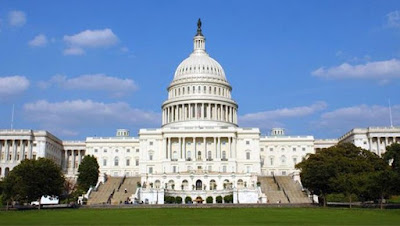
The American Congress Resolution in Support of The Resistance of The Iranian People

The news portal of MEK Iran informs that the resolution of the majority of the United States House of Representatives, signed by the 221 me...